
Thought leader marketing has come up in recent times as an effective and long-term approach to establishing personal brands. If you can position yourself as an expert advisor and an authority in a specific field, then you’re well ahead of your competition by leaps and bounds. This is what thought leadership centres around – building yourself up as an irreplaceable figure in your space, constantly delivering value through a sea of vast knowledge, opinions and know-how.
The quality of thought leadership takes many forms, including blog posts, essays, guest appearances, infographics, podcasts, videos, books, live and virtual events, webinars, white papers, original research papers, and an ongoing presence on social media. The purpose of thought leadership marketing is not to produce your brand’s sales-heavy content or brand awareness and blog writers can help you establish that awareness. Alternatively, you should approach it like content marketing, where you strive to inform, educate, and motivate your audience so that you become a credible source in your industry.
Blog writers with experience and knowledge in proper article structure can help build your reputation as a thought leader. For various individuals, thought leadership has various definitions. It transcends sectors in its usage and practice and differs in scope. It may adhere to a single sector or have a global impact. In essence, thought leadership is a notion that unlocks possibilities for us to become authoritative sources of problems that we are passionate about.
There are no shortcuts around this approach either. Thought leaders are genuinely experienced and knowledgeable, at least that’s the idea. Most of the people you see at the forefront of their sectors are there for a reason – they know their stuff. Thought leaders are constantly invited to share their insights on renowned platforms, and their audience can take away a lot of good information based on what they have to say.
On that note, thought leader marketing is essentially the practice of building up your chances of becoming a reputable thought leader, because we all have to start somewhere. What’s more, kickstarting the process can be as simple as churning out high-quality content from your blog. Here are a few other aspects of thought leadership and how blog writers can help optimize your content production.
What is thought leader marketing?
A thought leader is one who knows their industry inside and out is a person or organization who is identified as a thought leader. They understand all of their industry’s influences, technology, business dynamics, and individuals. Think leaders often consider their audience, with whom they offer goods and services. Through their communications, these leaders identify trends, provide insights, share ideas, and encourage and influence others. Think leaders are perceived as trustworthy outlets for knowledge, not only among their customers and clients but also among their colleagues and peers.
The goal of thought leadership is to deliver the greatest, most thorough answers to your audience’s issues. The objective is to provide genuine value. Readers should walk away from a piece of thought leadership material with the information they were looking for. A thought leader is someone who, because of their knowledge and ability, commands authority in a certain sector.
One of the most effective ways for brands to build their authority and develop is through thought leader marketing. This method is used by many marketers to improve brand awareness and market share.
Companies can influence buyers, outsmart the competition, and shorten the purchase cycle by implementing a thought leadership marketing strategy.
You, too, can create your brand as an industry thought leader. Prospects and customers will have a lot of faith in you if you can accomplish it well enough. This can help you effectively market your business and grow by great strides.
Establishing a starting phase for your strategy
Thought leader marketing entails a comprehensive plan that comprises many different campaigns and marketing channels aimed at one main objective – developing your thought leadership.
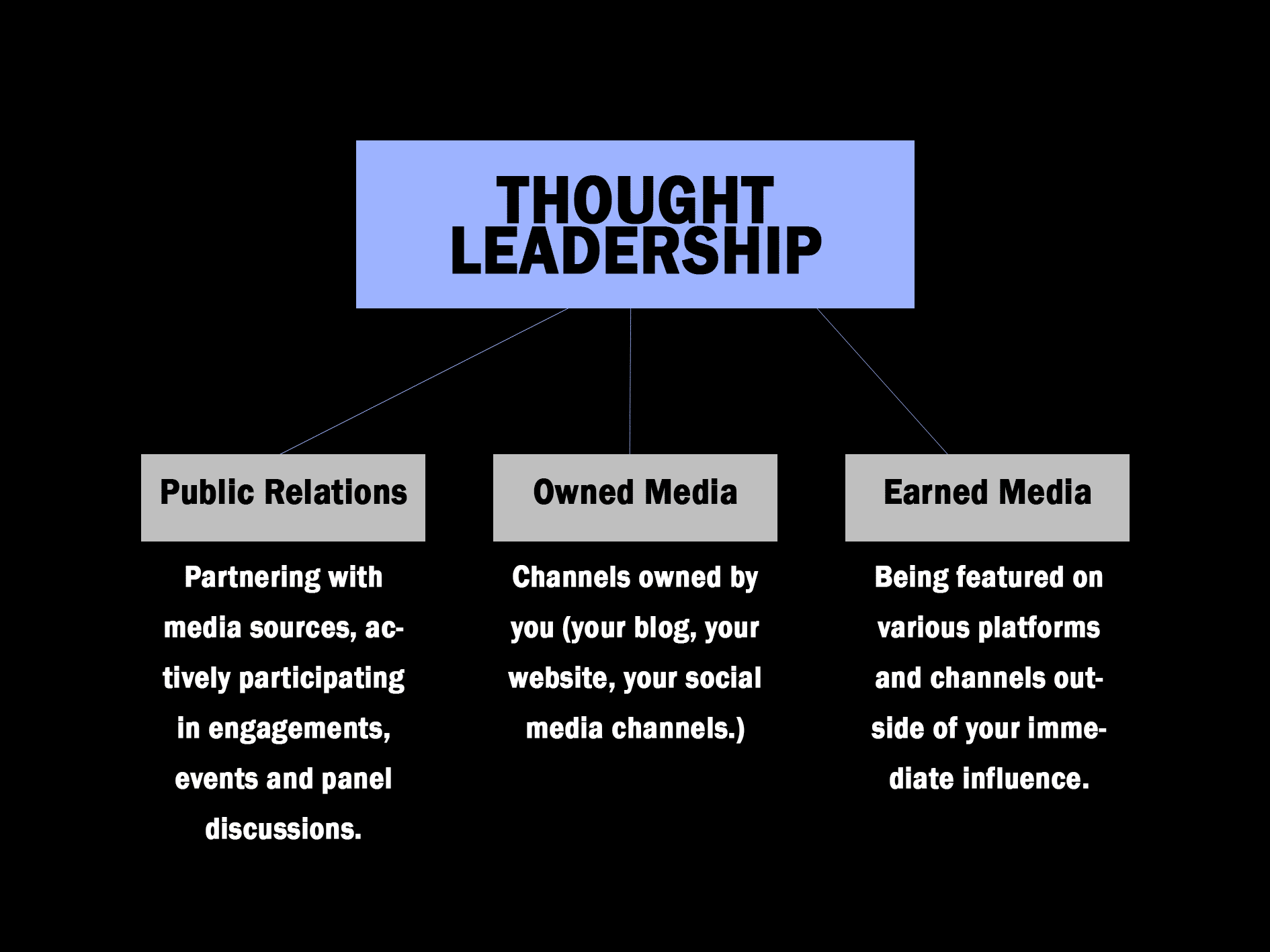
Here are three prominent approaches to building thought leadership for your brand:
Thought leadership through public relations (PR)
Whenever you search for a topic on Facebook or Youtube, there will be a host of familiar faces turning up again and again, with different channels, pages and sites featuring the same handful of individuals to talk about a trending topic in their field. This is the power of public relations, which involves thought leaders partnering with various media sources, attending engagements on various platforms, and generally being active in your sector.
Thought leadership via owned media channels (blog, social media)
One of the initial phases of thought leadership should include building an owned media network (all the assets that are owned by you and controlled by you, like your website, blog and social media channels). Think of Seth Godin and his reputable blog. To this day, he uses it to create articles and share opinions to do with marketing and branding. His consistency has paid off and he is now a renowned thought leader.
Thought leadership through earned media channels (features)
Earned media can be described as publicity acquired through promotional efforts from other forms of marketing apart from paid media (advertising). When there are external social media posts referencing you or your offering, or when there is media coverage related to you and your expertise, then that is earned media at play. You are being featured outside of your direct circle of influence the same way word-of-mouth works. This is a true indication that thought leadership is growing.
There are no hard and fast rules for establishing a thought leader strategy. You could start tomorrow by creating content about the first topic in your field that comes to mind without a single plan. Of course, the more tactical you are in your approach, the higher your chances of success.
Here are a few key steps to consider:
-Lay down a string of topics related to your expertise. Focus on precision. The more specific you are with what you know or what you’re good at, the better.
-Identify which topics tie back to your business’s products or services. This way, you can identify which topics potential prospects may be present in.
-Think of advisory content that you can create which would be useful to consumers.
-Consider building leadership assets – which can be resources, tools or content pieces that aid your target demographic in some shape or form.
Creating content as part of your thought leader marketing strategy

It’s worth clarifying that when we talk about thought leader marketing, we’re talking about a specific type of marketing approach as opposed to the numerous other approaches. A thought leadership article for example, may be produced by you as an attempt to establish better authority on a subject matter and demonstrate your expertise.
However, it isn’t necessary to churn out nothing but thought leadership pieces just because your goal is to become a thought leader. In most cases, thought leadership content is best mixed with other forms of content and there are a few reasons for this:
-Thought leadership content is hard to create. By its nature, this has to stand out as an exceptional piece that’s different from other articles or content on your site and digital channels.
-It has to be structurally sound and hold a compelling message (often in the form of an original opinion) that could possibly enlighten your audience on a new perspective or a recent event.
-It has to be well researched as well as thorough in its sources and citation, assuming that your piece picks up traction and is combed through by various other experts in the field. You’ll want to cover your bases.
For these reasons and more, thought leader marketing requires your full attention and effort in creating content, publishing opinions and contributing ideas that are unique and engaging.
The problem here is that your overall content workload will suffer if you commit to this approach too intensely. You will probably also want to give yourself some leeway for creating less taxing and simpler forms of content for the sake of consistency, because consistency is an important trope when building your brand online.
With that said, it’s best that you focus on consistency for producing thought leader pieces as well. Come up with a good ratio that you think you can handle (70/30 for regular content to thought leader content every year for example). Then, you’ll want to try sticking to that goal and build a content creation routine that allows you to keep the pace of your frequent publishing.
There are different forms of thought leadership content to consider:
Authoritative guides
How-to articles, thorough guides and comprehensive listicles that contain a lot of information on a specific topic are crucial content types. Readers are often eager to learn more about the subject so they can apply it for themselves and thought leaders should excel in providing value this way.
Opinion pieces
Being an expert in your field means that you should have a lot to say about the developments, updates and additions to the different areas of that field. Opinion pieces cater to that notion, as well-structured and well-articulated content pieces that highlight your thoughts and insights as someone who knows a thing or two about the subject matter.
Expert content (White paper pieces, Technical Documentation, Research and Studies)
Apart from content created for the general public, thought leader marketing may also be strengthened by the frequent contribution of white paper, academic and scholarly pieces constructed for a more formal purpose. These expert content pieces may be in the form of heavy research, original studies or documentation that helps further the development of a certain area in your field. These pursuits can establish your dominance in the sector.
Thought leader assets and resources
Very often you will find that thought leaders put out resources for their community to leverage on. These resources may be in the form of downloadable content, templates or tools that are designed to add convenience and value to people’s lives. For instance, marketing leaders offer strategic guides for download, or work sheets that reinforce your marketing strategies.
Characteristics of thought leaders
A thought leader can be identified as having several tropes or characteristics. For one, thought leaders have a professional direction or baseline – meaning they possess strong knowledge in a specific field. This is why thought leaders are often specialists, professors, doctors, CEOs and founders. You don’t necessarily need a title or position, but it happens to be a coincidence of the professional career established from time in the field.
Next, they need to have specific expertise on a very narrow topic within their field. For example, a very specific form of corporate law if the field is legal consultation. This way, their personal brand is built from a very clear and concise standpoint. They are known as the person who is most knowledgeable in this particular subject matter.
Another attribute of thought leadership is that they are active contributors to the space, creating content, doing research, holding discussions or exploring new ideas within the realm of their key focus.
These main characteristics among others, are what usually dictates the level of authority and influence the thought leader possesses in his or her field – thus contributing to the strength of thought leader marketing.
Some examples of thought leaders
Tim Wu:

Timothy Wu, also known as the ‘father of net neutrality’, has been a prominent thought leader who focuses on discussions related to big tech and problems of the growing power of a few giant corporations. He is primarily a legal scholar as well as a professor of law at the Columbia University. However, Tim Wu is a man of many hats, and has authored several books including the popular titles like The Attention Merchants and The Master Switch. He was also a contributing opinion writer for The New York Times.
Gary Vee:

When it comes to entrepreneurship, Gary Vee (formerly Gary Vaynerchuck) has grown to become a huge household name. Known mostly for his rapid-fire content revolving around tips for business owners and his prominent advocacy for the ‘hustle culture’, Gary Vee’s main agency Vaynerchuck Media offers consultation and support to various enterprises and brands looking for stronger growth tactics.
Neil Patel:
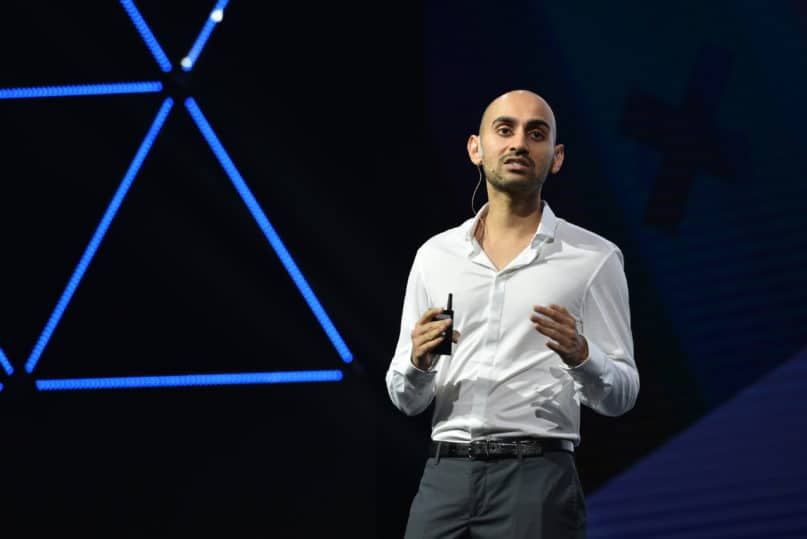
In the massive space of digital marketing, Neil Patel stands out as one of the most recognized gurus out there. His previous endeavour Kissmetrics, and current project Ubersuggest, helped countless people establish SEO strategies for their businesses. Neil is a talented marketer who often shows up at the forefront of marketing discussions and clearly prevails in the realm of thought leader marketing.
Seth Godin:

American author and former dot com business executive Seth Godin made his name with hugely popular books titles including Tribes and This Is Marketing. He runs one of the most comprehensive marketing blogs out there and is a constant contributor of ideas, advice and discussions that revolve around marketing and branding.
These exemplary thought leaders have spent a great deal of time and effort in gradually developing authority in their respective fields. It’s worth noting that every single one of these figures utilize content creation as a prominent tool for propagating their thought leader marketing initiatives.
Neil Patel is heavy on articles and video content, and so is Gary Vee. On the other hand, Seth Godin and Tim Wu are incredible authors who have published many successful books. Thought leader marketing takes time and patience. It is a constant learning curve that will require dedication whether you’re writing articles for your blog or sharing insights on featured platforms. At the end of it, you can expect to be rewarded with some form of dominance within your field as long as you do things right and do things consistently.
Bonus tips for creating content for thought leader marketing
Building a branded blog with blog writers
In carrying out their SEO campaign and building brand recognition for their business, most marketers recognize the value of branded blogs. Branded blogs allow companies and people to share their ideas about topics that are relevant to their niche. Consistent blogging allows you to comment on current trends in the industry and show your command over their subject. Blog writers are perfect for producing consistent, quality content for your independent channels or websites so you can focus on other aspects of marketing.
Google rewards content that is relevant, and fresh. Strategically positioning your web pages to acquire backlinks, build page authority, and help your website rank organically for Search Engine Optimization (SEO) is the development of evergreen content. SEO for startups is crucial in ensuring the company can compete in industries with many competitors.
More importantly, through quality content, creating a consistent blog creates the authority of your brand over its niche. The higher the quality of your content, the more your brand is trusted by clients. This, in essence, results in greater brand loyalty, which greatly adds to the return on investment (ROI).
Building your thought leadership content following SEO
To position your web pages to index and rank for a broad range of semantically similar keyword phrases, you want to establish thematically related categories for your content. Google can assess the quality of the content with machine learning technology and evaluate its importance to user intent better than ever.
To gain backlinks and build your value to consumers in your niche, extend your content marketing strategy to different outlets. Providing updates on related websites, engaging in niche forums, and writing reviews of the industry all get you involved with your audience and communicate your command of its most critical subjects.
You should also consider producing material, such as a white paper or an e-book, that serves to show original research. In terms of publishing, at a far higher rate than short-form content, long-form content is posted and usually ranks higher than thin content.
Via keyword words used in your content and across all your sales funnel web sites, describe your brand to customers. Optimize all meta tags from your research with suitable keywords and add social media buttons to facilitate fast sharing.
Publish high-quality and valuable content on various platforms
As a thought leader, your job is to understand the trends and problems that affect your audience and deliver valuable, insightful content. Showing your audience that you are a specialist in your niche can help develop your reputation as a thought leader and credibility. Blog writers create the content and establish basic research for you and you provide the knowledge and expertise from your own experience.
You are the expert, and they expect you to publish in-depth, high-quality content. They will wait patiently for your future content if your content helps them by solving a problem or showing them something useful.
Publishing material on your blog, podcast, or channel on YouTube means that your media needs to attract your audience. Effective opinion leaders ensure that in different ways they publish useful material, such as guest blog posts and social media sites, get interviewed for other podcast shows, get featured in other press publications, and talk at events. It is important to publish your thought leadership content where your current and potentially new audience is.
Blog writers can help with consistency
Building confidence with your audience requires you to regularly publish material. Blog writers can prepare, schedule, and publish your thought leadership material using an editorial calendar. Note, for various platforms, you can also repurpose your content. For instance, to reach a broader audience, the slides used for a speaking event may be published on SlideShare.
Be genuine in your thought leadership
By sharing real, truthful content, opinion leaders will humanize their brand by sharing genuine content. People can get to see the faces behind the brand and hear the thoughts of the employees. It is a powerful way to create long-term trust in your brand and place you in a pole position when consumers make their purchase decision to be authentic and share useful material. Bear in mind that the best material comes from you, the professional.
Engage in social media
Everyone and anyone are on social media. Social media will help you reinforce the efforts of thought leadership and improve your follow-up. Create a following across sites for social media such as Facebook, Twitter, and LinkedIn. These platforms link you with more individuals and enable you to easily communicate with them.
Share articles worthwhile and post related and informative comments. To meet your audience immediately, you can also broadcast live videos. Create ongoing high-engagement posts that build followers and extend your scope to completely take advantage of social media.